Mahavir Bullion & Refinery Private Limited (“MBRPL” or the “Company”) is committed to providing a legitimate, accessible and fair mechanism through which employees, workers, customers, suppliers, business partners, contractors, visitors, communities and other relevant stakeholders can raise concerns, complaints, requests for information or grievances connected with the Company’s activities.
3. Purpose
• Provide a clear and accessible process for raising, receiving, assessing, investigating, resolving and closing grievances. • Ensure grievances are handled fairly, respectfully, consistently and without retaliation. • Provide timely acknowledgement, investigation, response and resolution, subject to the nature and complexity of the matter. • Protect confidentiality and anonymity where requested and reasonably possible. • Identify root causes and implement corrective actions to prevent recurrence. • Provide appropriate escalation routes and preserve the right of a complainant to use available external remedies.
4. Scope
This Policy applies to: • All permanent, temporary, contractual, trainee and outsourced workers. • Directors, management and supervisors. • Customers, suppliers, business partners, contractors, job-workers, agents, service providers and transporters. • Visitors and other persons interacting with the Company. • Relevant affected stakeholders and communities where the grievance relates to Company activities.
5. RJC COP 2024 Requirements Addressed
RJC Provision
Requirement / Expectation
Policy Control
COP 2.6
Legitimate, rights-compatible complaints and grievance mechanism; accessible, communicated, understandable, unbiased, predictable and transparent.
Formal channels, responsible officers, escalation, communication, investigation, resolution and records.
Non-retaliation, training, case handling, escalation, confidential records and CAPA.
COP 2.7a
Monitor and review grievance mechanism performance and implement corrective action where gaps are identified.
Periodic review, trend analysis, effectiveness assessment and CAPA.
COP 18.5
Communicate the mechanism to workers, ensure freedom from penalty/retaliation and allow a workers’ representative if requested.
Worker communication, non-retaliation and representative involvement.
6. Grievance Principles
• Accessibility – channels shall be reasonably easy to use and communicated to relevant stakeholders. • Legitimacy and rights compatibility – the mechanism shall respect applicable human rights and legal requirements. • Fairness and impartiality – complaints shall be assessed and handled without bias or conflict of interest. • Confidentiality – information shall be restricted to persons with a legitimate need to know. • Anonymity – anonymous complaints shall be accepted where reasonably possible and shall be assessed on the information available. • Non-retaliation – no person shall be penalised, threatened, discriminated against or otherwise retaliated against for raising a grievance in good faith or participating in its handling.
• Predictability and transparency – the complainant shall be informed of the process and status as appropriate. • Timeliness – cases shall be acknowledged, investigated and resolved within reasonable timeframes appropriate to their seriousness and complexity. • Continuous improvement – trends, root causes, remedies and corrective actions shall be reviewed to reduce recurrence.
7. Types of Grievances Covered
• Workplace treatment, harassment, discrimination, dignity and respect. • Employment terms, working conditions, wages, working hours and workplace facilities. • Health, safety and environmental concerns. • Human rights concerns, including potential adverse impacts linked to Company operations or business relationships. • Responsible sourcing, supply-chain due diligence and business-partner concerns. • Bribery, corruption, fraud, conflicts of interest or other unethical conduct, subject to the Whistleblower / Anti-Bribery channels. • Customer or stakeholder complaints relating to Company services, products, communication or conduct. • Security-related concerns and inappropriate treatment by security personnel. • Other concerns relating to the Company’s policies, practices or impacts.
8. Grievance Channels
The Company’s existing Policy provides for telephone, email and written complaints. The current contact details include the Company address and a generic email address. These details are retained as placeholders where appropriate for controlled finalisation.
Channel
Details
Availability / Notes
Telephone / Helpline
+91-84216 27321
Available during working hours; grievances are received and handled confidentially by authorized personnel
Employees may raise grievances directly with their immediate Supervisor / Department Head / HR Representative.
Available during working hours; grievances shall be treated confidentially and handled through the grievance redressal process.
9. Grievance Handling Procedure
9.1 Receipt and Registration
1. Receive the complaint through any approved channel. 2. Record the date, source, subject, relevant persons, location and available supporting information. 3. Assign a unique grievance reference number. 4. Acknowledge receipt to the complainant where contact details are available. 5. Where the complaint is anonymous, record and assess the available information without attempting to identify the complainant unless legally required.
9.2 Screening and Classification
6. Determine whether the matter falls within this Policy or should be routed to another controlled mechanism. 7. Assess urgency, severity, potential human-rights impact, health and safety risk, legal/regulatory exposure and potential conflicts of interest. 8. Immediately escalate serious matters requiring urgent protection, legal intervention or senior management attention. 9. Where another specialist process applies, such as POSH, AML/CFT, anti-bribery or whistleblowing, transfer or coordinate the case in accordance with the relevant controlled procedure while preserving confidentiality.
9.3 Investigation
10. Investigations shall be conducted by appropriately authorised and trained personnel. 11. The investigator shall be impartial and shall not handle a matter where there is a material conflict of interest. 12. Relevant documents, records, interviews and other evidence shall be reviewed. 13. Both the complainant and relevant persons shall be treated fairly and respectfully. 14. Information shall be shared only on a need-to-know basis, subject to law and investigation requirements.
9.4 Response and Resolution
15. The Company shall provide a timely response appropriate to the nature and complexity of the grievance. 16. Where appropriate, the complainant shall be informed of the outcome and relevant remedial action, subject to confidentiality, privacy and legal limitations. 17. Where a grievance is substantiated, appropriate corrective, preventive or remedial action shall be identified, assigned and tracked to closure. 18. Where a grievance cannot be substantiated, the case shall still be documented with the basis for the conclusion.
9.5 Escalation / Appeal
19. A complainant who is dissatisfied with the response may request review by a designated senior authority. 20. Serious or unresolved matters shall be escalated to Senior Management and, where appropriate, the Board or another authorised governance body. 21. Use of the Company grievance mechanism shall not remove or prevent an individual’s right to use available administrative, judicial or other non-judicial external remedies.
10. Protection Against Retaliation
The Company shall not tolerate retaliation against any person who raises a grievance in good faith, provides information, participates in an investigation or assists another person in accessing the grievance mechanism. Retaliation may include threats, dismissal, adverse treatment, discrimination, intimidation, harassment or other detrimental action.
Any allegation of retaliation shall itself be treated as a grievance and investigated promptly.
11. Confidentiality and Anonymity
• Grievance records shall be maintained securely with access restricted to authorised personnel. • The identity of complainants and witnesses shall be protected to the extent reasonably possible. • Where anonymity has been requested, information shall be handled in a manner that protects the person’s identity unless disclosure is required by law. • Confidentiality shall not prevent lawful reporting to competent authorities where required.
12. Roles and Responsibilities
Role
Responsibility
Board / Senior Management
Approve the mechanism, provide oversight, review significant trends and ensure adequate resources.
Compliance Officer / Grievance Owner
Maintain the mechanism, oversee case handling, escalation, records, trend analysis and effectiveness review.
HR / Management
Receive and support worker grievances, ensure fair treatment and coordinate investigations where appropriate.
Investigators
Conduct impartial, confidential and documented investigations.
Supervisors / Managers
Respectfully receive concerns, avoid retaliation and promptly escalate matters.
Workers / Stakeholders
Provide information in good faith and cooperate with investigations where appropriate.
13. Training and Awareness
• Relevant employees shall receive induction and periodic training on the grievance mechanism. • Training shall cover available channels, confidentiality, non-retaliation, respectful handling, escalation and the role of workers’ representatives. • Managers and personnel responsible for receiving or investigating grievances shall receive role-appropriate training. • Records of training and attendance shall be maintained.
14. Records and Record Retention
• Grievance register / case log. • Complaint or grievance received and supporting documents. • Acknowledgement and communication records. • Investigation notes, evidence and findings. • Outcome / resolution and remedial action records. • Corrective and preventive action tracking. • Appeal / escalation records. • Training and awareness records.
RJC COP 2.5 requires records covering applicable COP requirements to be retained for at least five years or longer where national legislation requires.
15. Monitoring, Effectiveness and Corrective Action
• The Company shall periodically review grievance volumes, categories, response times, outcomes, recurring issues and corrective actions. • Management shall assess whether the grievance mechanism is accessible, trusted and effective. • Where gaps are identified, corrective actions shall be assigned, monitored and tracked to closure. • Significant trends and unresolved high-risk matters shall be escalated to Senior Management and, where appropriate, the Board.
16. Cross-Reference with Other Reporting Mechanisms
To avoid confusion between reporting channels, the following routing shall apply:
• This Policy shall be communicated to relevant employees and workers, including new workers at recruitment/induction. • Relevant external stakeholders shall be informed of the available grievance channels where appropriate. • The Policy and appropriate grievance contact information shall be made accessible to relevant stakeholders, including through workplace displays and the Company website where applicable. • Information shall be communicated in a language and format reasonably understandable to the intended users.
18. Policy Review and Approval
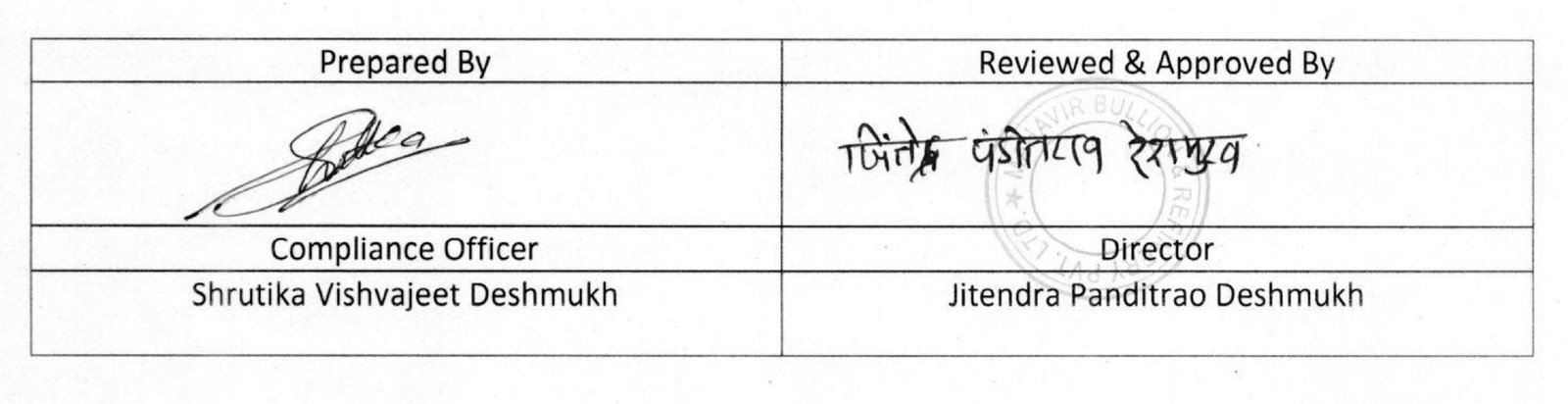
This Policy shall be reviewed at least once every 12 months and additionally when there are changes in law, RJC requirements, business activities, stakeholder expectations, grievance trends, significant incidents, audit findings or identified weaknesses in the mechanism. RJC COP 2.7a requires monitoring and review of grievance mechanism performance and corrective action where gaps are identified, while COP 2.7b requires top management review at least annually.
Changes shall be documented through the Company’s document-control process and approved by the Board or other authorised approving body.